
 By Suneel Kumar
In the heart of Tharparkar, where the desert once breathed with the rhythm of wind, trees, and grazing herds, the landscape now lies scarred — a victim of what locals call “development at the cost of survival.”
Just outside the Gorano Dam area, the destruction stretches across nearly 2,000 to 3,000 acres. Natural pastures and native trees that once shaded humans, birds, and cattle alike have been bulldozed. For a decade, the continuous release of water from the dam has stripped the land of its fertility. What were once lush fields and green thickets have now turned into barren, toxic plains.
We have lost millions of trees,” says a resident of Gorano village. “Those trees were our shelter, our livelihood, and home to countless birds. Now, nothing remains — just dust and heat.
A Desert Losing Its Breath
Thar’s ecosystem has always been fragile yet balanced. Trees played a crucial role — protecting the soil from erosion, absorbing rainwater, and maintaining the delicate equilibrium of desert life. With their disappearance, temperatures have risen sharply, dust storms have become more frequent, and respiratory diseases are on the rise.
The loss of grazing lands has pushed livestock — the backbone of Thari livelihoods — into decline. Many families now struggle to feed their animals or migrate seasonally in search of better pastures. “Our land and our future are both dying,” says another villager.
The Iron Tracks of Progress
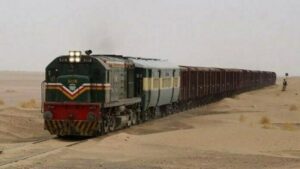
Adding to the ecological turmoil is the ongoing construction of a 105-kilometer railway line stretching from Thar Coalfield Block II to Chhore in Umerkot district. The government’s planning document, known as PC-1, claims that the rail project will reduce transportation costs and environmental harm compared to road transport.
The first phase includes seven new railway stations and connects the Thar coal mines to Pakistan’s national rail network. Supporters argue it will cut fuel use, save billions in imports, and stimulate industrial growth.
The Iron Tracks of Progress
Adding to the ecological turmoil is the ongoing construction of a 105-kilometer railway line stretching from Thar Coalfield Block II to Chhore in Umerkot district. The government’s planning document, known as PC-1, claims that the rail project will reduce transportation costs and environmental harm compared to road transport.
The first phase includes seven new railway stations and connects the Thar coal mines to Pakistan’s national rail network. Supporters argue it will cut fuel use, save billions in imports, and stimulate industrial growth.
Promises and Paradoxes
Government planners insist that tree plantations will accompany the rail project to offset deforestation and reduce pollution. They also highlight that transporting coal by train consumes less fuel — about 3.5 liters per 1,000 tons per kilometer, compared to 10 liters by road — and will, therefore, minimize environmental impact.
However, environmental experts warn that the long-distance transport of coal will still emit significant greenhouse gases and cause noise pollution, disturbing wildlife and human settlements. “The paradox is clear,” says an environmental researcher from Hyderabad University. “We’re trying to solve an energy problem by deepening a climate crisis.”
The Price of Power
While the Thar coal and railway projects promise economic growth and industrial expansion, their environmental and social costs remain largely unacknowledged. The region’s biodiversity — already under strain — faces irreversible loss. Local communities are being pushed toward poverty as their natural resources vanish before their eyes.
What Thar is witnessing today is more than just an ecological imbalance — it’s a moral one. The question that now echoes across the desert is: can progress truly be called progress when it silences the very heartbeat of nature?