
 When Heat Defeats the King of Fruits: Climate Change and the Crisis Facing Mirpurkhas Mango Growers
SUNEEL KUMAR
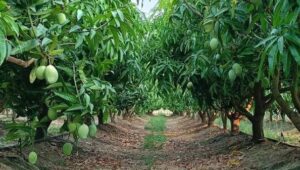
This summer, Ashok Kumar’s mango orchard in Mirpurkhas did not look the way it had in previous years. Instead of seeing a healthy crop developing across the trees, the farmer watched as extreme weather, disease and poor fruit development reduced his expected harvest, For Kumar, who depends on mango cultivation for his family’s livelihood, the damage is more than an agricultural setback. It means lower income after months of investment in irrigation, fertilizers, pesticides and labour.
The extreme heat affected the trees and the fruit. We also faced disease problems, and production was much lower than we expected,” Kumar said. He believes the changing weather is making mango cultivation increasingly difficult for farmers in Mirpurkhas
According to a report published by Dawn on May 12, 2026, Pakistan’s mango production is expected to fall by around 20 percent this season, from nearly 1.8 million tonnes last year to about 1.5 million tonnes. Industry stakeholders attributed the expected decline mainly to unusual weather conditions that damaged flowering during the early stages of the crop. The area under mango cultivation, however, remained almost unchanged at about 160,000 hectares. Dawn also reported that early-producing Sindh districts, including Mirpurkhas, Tando Allahyar and Hyderabad, were reporting average yields.
Mango production is highly dependent on seasonal weather conditions. Temperature changes during flowering and fruit development can affect the quantity and quality of the crop.
Agricultural experts have previously warned that climate variability, heatwaves, water shortages and disease are putting additional pressure on mango orchards in Sindh. In February 2026, the Associated Press of Pakistan reported that mango-growing areas including Mirpurkhas and Tando Allahyar experience temperatures of around 35°C to 45°C between February and June, while the optimal range for healthy mango growth is considerably lower.
The problem is not limited to heat alone. Changing weather patterns can also affect flowering, fruit development and the spread of pests and diseases. Research and agricultural experts have identified climate change, water scarcity and diseases such as mango malformation as important factors behind declining production in Sindh.
Farmers Count Their Losses
Ashok Kumar said the extreme heat and disease outbreaks reduced both fruit quality and production in his orchard, leaving him with significant financial losses. He said farmers need timely technical guidance, disease-management support and practical information on how to adapt orchards to changing weather conditions.
Another mango grower, Irshad Muree, said unpredictable weather has made mango farming increasingly difficult. He said many fruits were damaged before harvest, resulting in lower yields and reduced income.
According to Muree, farmers need stronger government support, better disease-management services and climate-resilient farming techniques to protect their livelihoods, For farmers like Kumar and Muree, the problem goes beyond a single poor harvest. Mango cultivation supports a wider rural economy that includes agricultural labourers, transporters, traders and other seasonal workers.
Ramesh Kumar, a resident of Mirpurkhas, said changes in weather have become increasingly noticeable in the district.
“This year, many farmers in our area complained about poor mango production and disease outbreaks in their orchards. Since agriculture is the backbone of Mirpurkhas’ economy, lower mango production affects laborer’s, traders, transporters and many families who depend on the harvest for their income,” he said.
However, the perception of residents needs to be considered alongside long-term meteorological records. Pakistan Meteorological Department data should be used to compare temperature trends in Mirpurkhas over recent years and establish whether average temperatures and the duration or intensity of the hot season have increased.
Agricultural experts say climate-related stress can make mango trees more vulnerable to disease and can interfere with flowering and fruit development.
Dr. Ghulam Mustafa Laghari, a plant pathologist and agricultural researcher, said prolonged heat stress can weaken mango trees and increase their vulnerability to diseases and pest attacks. He explained that changes in climate and seasonal patterns can directly affect both the quality and quantity of mango production.
He stressed the need for scientific disease monitoring, climate-resilient farming practices and regular training for growers.
Evidence from Sindh also points to the combined effects of climate change, water shortages and disease. In 2025, Sindh Agriculture University plant pathologist Muhammad Ibrahim Khaskheli told the Associated Press that climate change, diseases such as mango malformation and inadequate water availability were contributing to lower mango production.
Muhammad Aslam Soomro, an Agriculture Extension Officer with the Sindh Agriculture Department, said climate variability has become a growing challenge for mango production in Sindh.
According to him, prolonged periods of heat during flowering and fruit-setting can put additional stress on mango trees and increase the risk of disease and pest problems. He said farmers are advised to regularly monitor their orchards, follow recommended disease-management practices and maintain appropriate irrigation during periods of extreme heat.
“Climate-resilient farming practices and timely technical guidance are essential to minimize production losses and protect growers’ livelihoods,” he said.
For farmers, however, timely access to such guidance remains critical. Disease identification, irrigation advice and early information about extreme weather can help growers take action before damage becomes severe.
The difficulties faced by Mirpurkhas mango growers point to a larger question: how prepared is Pakistan’s agriculture sector for a changing climate?
The 2026 national production estimate shows that weather conditions can have a significant impact on one of the country’s most important fruit crops. The national decline of around 20 percent cannot be directly applied to Mirpurkhas, where Dawn reported average yields, but the experience of local growers shows that climate and disease pressures remain a serious concern.
For Mirpurkhas farmers, adapting to these changes will require more than pesticides and irrigation. Experts say stronger disease surveillance, climate-resilient farming methods, improved agricultural extension services and better access to scientific information will be necessary.
The mango may still be known as the “King of Fruits”, but for the farmers who grow it, the future of the crop increasingly depends on how effectively they can adapt to a hotter and more unpredictable climate.