
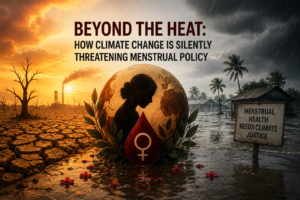
 Beyond the Heat: How Climate Change Is Silently Threatening Menstrual Health in Sindh
SUNEEL KUMAR
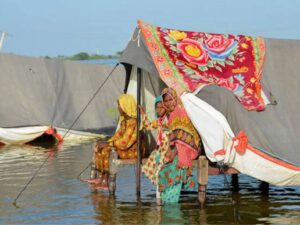
As climate change intensifies across Pakistan, its devastating impacts are becoming increasingly visible through record-breaking heatwaves, prolonged droughts, devastating floods, and worsening water shortages. While these environmental challenges are often discussed in relation to agriculture, food security, and livelihoods, one critical issue remains largely ignored: menstrual health, For thousands of women and girls in Sindh, managing menstruation has become even more challenging as climate-related disasters continue to disrupt access to clean water, sanitation facilities, healthcare, and menstrual hygiene products. In many rural and climate-vulnerable communities, women are forced to cope with extreme heat, limited privacy, and inadequate hygiene facilities, placing both their health and dignity at risk.
According to UNICEF, nearly 70 percent of households in Pakistan consume bacterially contaminated water, while poor access to water, sanitation, and hygiene (WASH) continues to threaten public health. These conditions become even more severe during floods, droughts, and heatwaves, making safe menstrual hygiene management increasingly difficult for women and adolescent girls.
The challenge extends beyond physical health. Medical experts warn that poor menstrual hygiene, particularly where clean water and sanitation are unavailable, can increase the risk of urinary tract infections (UTIs), reproductive tract infections (RTIs), skin irritation, dehydration, and heat-related illnesses. Beyond these physical impacts, many women and girls also experience stress, anxiety, embarrassment, and social isolation due to the lack of safe and dignified menstrual hygiene facilities.
Despite these realities, the relationship between climate change and menstrual health has received limited attention in Pakistan’s climate discourse. Most climate discussions focus on infrastructure and economic losses, while the gender-specific health consequences remain largely invisible.
This story aims to highlight the experiences of women and girls living in climate-affected communities across Sindh while exploring the role of community organizations promoting menstrual health education and reusable sanitary pads. These initiatives not only improve menstrual hygiene but also provide environmentally sustainable alternatives that reduce waste and improve affordability for low-income families.
 Janta Kumari, a community leader from Sukkur, will share her observations on how extreme heat and water scarcity affect women and girls during menstruation. She will discuss the difficulties in accessing clean water and menstrual hygiene products, the social challenges faced by women, and the community’s response to these issues.
Maria Altaf, a government school teacher from Ghotki, will be interviewed to explore community perceptions regarding menstrual health and the challenges faced by adolescent girls in managing menstruation during heatwaves and water shortages. She will also provide her perspective on menstrual health awareness in schools, the availability of WASH facilities, and the importance of climate-resilient policies to ensure menstrual dignity for girls and women.
Fatima Yasmeen, Program Representative at Idara-e-Taleem-o-Aagahi (ITA), will be interviewed to discuss ITA’s work on menstrual health education, the impact of climate change on women’s health and dignity, the promotion of reusable sanitary pads, and policy recommendations to strengthen climate-resilient menstrual health services in vulnerable communities.
Joshua, Program Representative at Idara-e-Taleem-o-Aagahi (ITA), will be interviewed to discuss ITA’s initiatives on climate resilience and menstrual health, community awareness programmes, the distribution and promotion of reusable sanitary pads, and recommendations for strengthening climate-responsive menstrual health services and policies in Pakistan.
Mahnoor Omer will be interviewed to discuss Pakistan’s menstrual health policies, the campaign against the “period tax” on sanitary products, barriers to accessing affordable menstrual hygiene products, and legal and policy reforms needed to ensure menstrual dignity and climate-resilient menstrual health services for women and girls.
Climate change is no longer only an environmental issue—it is also a growing public health and gender equality challenge. This story will investigate how extreme heat, water scarcity, floods, and other climate-related events are affecting menstrual health and hygiene among women and girls in Sindh. By combining community experiences with expert opinions, government perspectives, and policy insights, the report will uncover an overlooked climate justice issue that deserves greater public attention. Ultimately, the story aims to promote informed dialogue, strengthen awareness, and encourage policymakers to integrate menstrual health into climate adaptation, disaster response, and public health strategies to protect the dignity, health, and rights of women and girls.