
 Black Smoke, Silent Suffering: How Charcoal Kilns Are Polluting Badin’s Air
Air pollution is one of the world’s deadliest environmental health risks, causing an estimated 7 million premature deaths every year, according to the World Health Organization (WHO). In Pakistan, worsening air quality has become a growing public health concern, driven by industrial emissions, vehicle exhaust, crop burning, brick kilns, and other pollution sources. However, one overlooked contributor is the traditional production of charcoal, particularly in rural areas where environmental monitoring remains limited.
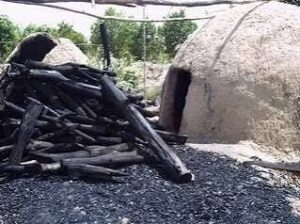
Along the Badin–Mithi Wango mor Road in Sindh, large earthen charcoal kilns continuously burn wood for several days, releasing thick black smoke into the atmosphere. The smoke spreads across nearby villages and highways, exposing local residents, workers, and commuters to harmful pollutants every day. Despite these visible emissions, little attention has been given to the environmental and health impacts of charcoal production in the region.
According to the State of Global Air Report 2024, air pollution remains one of the leading risk factors for death worldwide, contributing to millions of deaths from heart disease, stroke, lung cancer, and chronic respiratory illnesses. Fine particulate matter (PM2.5) is considered especially dangerous because it can penetrate deep into the lungs and bloodstream, increasing the risk of serious health complications.
This investigation will examine how charcoal kilns along the Badin–Mithi Wango morRoad are affecting air quality, public health, and the local environment. Through field reporting, scientific evidence, and interviews with residents, charcoal producers, environmental experts, medical professionals, and government officials, the story aims to determine whether environmental regulations are being enforced and what steps are needed to protect communities from the hidden cost of charcoal production.
Raja Lund, a local resident living near the charcoal kilns along the Badin–Mithi Road, will be interviewed to share his experiences of living in an area constantly exposed to charcoal smoke. He will discuss its impact on air quality, his family’s health, and the daily challenges faced by nearby communities.
Raheem Khaskheli, a bus driver who regularly travels on the Badin–Mithi Road, will be interviewed to explain how dense smoke from charcoal kilns affects road visibility, passenger safety, driving conditions, and overall transportation on the route.
Naveed, a charcoal kiln worker, will be interviewed to explain the charcoal production process, the working conditions at the kilns, the importance of charcoal production for his livelihood, and the occupational health and environmental challenges associated with the work.
Dr. Santosh Kumar (MBBS), a medical doctor, will be interviewed to explain the respiratory and other health risks associated with prolonged exposure to charcoal kiln smoke. He will discuss the effects of air pollution on children, elderly people, and kiln workers, common respiratory illnesses linked to smoke exposure, and recommendations for reducing health risks in affected communities.
Dr. Ghulam Akbar Mahesar, an environmental expert from the Institute of Environmental Engineering and Management, Mehran University of Engineering and Technology, Jamshoro, will be interviewed to discuss the environmental impacts of charcoal kilns, the pollutants released during charcoal production, their effects on air quality and climate, and sustainable measures to reduce emissions and protect nearby communities.
This investigation will examine the hidden environmental and public health impacts of charcoal production along the Badin–Mithi Wango mor Road by combining field reporting, scientific evidence, and expert perspectives. Through interviews with local residents, charcoal workers, environmental experts, medical professionals, and government officials, the story aims to reveal how charcoal kiln emissions affect air quality, human health, and the surrounding environment. It will also assess whether existing environmental regulations are being effectively enforced and identify gaps in monitoring and policy implementation. Ultimately, the report seeks to encourage stronger environmental governance, promote sustainable charcoal production practices, and raise public awareness about the urgent need to protect both communities and the environment from the harmful effects of air pollution.