
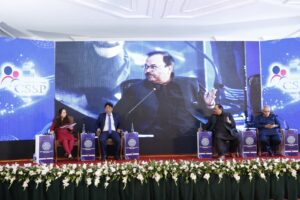
 SECC26 conference in Karachi highlights energy poverty, exclusion of host comm unities, environmental concerns in Thar and calls for provincial control over electricity governance
KARACHI, November 3, 2026: Sindh’s ambitious energy potential has yet to translate into reliable electricity, better living standards and economic opportunities for thousands of people living in rural and energy-producing areas, speakers and community representatives said on Tuesday at the opening day of the Sindh Energy & Climate Conference (#SECC26) in #Karachi.
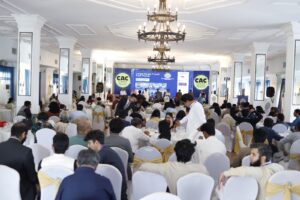
The two-day conference, being held at Beach Luxury Hotel, brought together government representatives, energy experts, researchers, civil society organisations, journalists and communities affected by energy projects to discuss the province’s energy future and the need for a people-centred transition.
Across several sessions, a recurring concern emerged: while Sindh continues to host major wind, solar, coal, gas and other energy projects, many communities living in their immediate surroundings remain deprived of basic electricity, clean water, employment, healthcare and meaningful participation in decisions affecting their lives.
Speakers argued that a transition towards renewable energy cannot be considered just if the people whose land and resources support these projects continue to experience poverty, exclusion and environmental challenges.
The conference opened with remarks by Mustafa Talpur, head of PIDC, who called for collective dialogue and coordination among stakeholders to develop a shared understanding of Sindh’s energy and climate challenges.
Energy-rich Sindh, electricity-deprived communities
One of the central discussions focused on the contradiction between Sindh’s considerable energy resources and the continuing electricity crisis faced by underserved communities.
During a panel discussion on Sindh’s energy and climate landscape, experts highlighted that despite the province’s enormous wind, solar, gas and thermal energy potential, reliable electricity remains inaccessible to many rural households.
Moderated by Zara Agha, Programme Lead for Just Energy Transition at CSSP, the session brought together representatives from the development, research, academic and civil society sectors.
Panelists stressed that expanding large-scale electricity generation alone would not resolve the energy crisis unless investments were aligned with actual demand and the needs of underserved populations.
They called for decentralised energy systems, particularly microgrids and minigrids, which could provide electricity to remote villages without depending entirely on expansion of the national grid.
The discussion also highlighted financing as a major obstacle to implementing decentralised energy solutions, despite their potential to improve electricity access in rural areas.
Zeenia Shaukat, Co-founder and Director of The Knowledge Forum, pointed out that Sindh’s energy potential remains disconnected from the everyday realities of its largely rural and agriculture-dependent population.
She also highlighted the absence of reliable, disaggregated data, which makes it difficult to understand the unequal impacts of energy deprivation, particularly on women.
Referring to a K-Electric report, she said approximately 15 million people experience 12 to 13 hours of load-shedding, affecting women’s access to water, hygiene and sanitation.
The panel further emphasised that climate adaptation programmes must respond to the actual needs of affected households rather than being designed without their meaningful involvement.
“What is for us does not include us, so it is not for us,” observed Dr Suneel Kumar, Assistant Professor at Aga Khan University, highlighting the exclusion of vulnerable communities from decisions concerning climate adaptation.
Hussain Jarwar, CEO of Indus Consortium, also called for a shift towards grant-based climate financing, arguing that vulnerable countries should not be pushed further into debt while dealing with climate impacts they have contributed relatively little to causing.
Communities hosting wind projects still waiting for electricity
A particularly significant discussion examined the living conditions of communities surrounding Sindh’s wind and independent power projects.
The panel, titled How to Make the Energy Transition Just? Moving to Renewables with Intention, highlighted a striking disparity: communities living near major electricity-generating facilities continue to face inadequate access to basic energy services.
Presenting research based on four rounds of Pakistan Social and Living Standards Measurement (PSLM) data, Uswa Ali Memon, Programme Manager of the Gender Just Transition Collective at Sath, said only 16 per cent of households surrounding 36 mapped independent power producers (IPPs), with a combined generation capacity of approximately 1,800 megawatts, had access to the electricity grid.
The findings also indicated that 63 per cent of households using solar energy had financed their systems through their own resources. Some families reportedly sold women’s jewellery and livestock to purchase solar equipment.
The research further revealed that 52 per cent of solar users primarily used the systems for charging mobile phones, while none reported using them for cooking. Only seven per cent identified women as the main decision-makers regarding household energy.
The findings raised serious questions about whether the expansion of renewable energy is improving the lives of the people living closest to these projects.
“What we are calling a transition is, for these communities, the first form of access they have ever had. This transition framing is not for those who did not have access in the first place,” Memon said.
Community representative Rukhsar recalled that wind turbines began appearing in Jhimpir in 2007 without meaningful consultation with local residents.
She said a committee was formed consisting of men, while women were excluded from the process.
“We are not against wind energy. We only want to be asked before our land is used. It is our right,” she said.
Dr Ameer Ali Abro of the University of Sindh also referred to the expansion of wind turbines in Gharo, saying thousands of acres had been covered by turbines by 2012–13, while local communities continued to wait for promised employment and development opportunities.
The panel called for prior community consent, meaningful participation of women, local employment opportunities and transparent benefit-sharing mechanisms.
Calls for binding CSR framework for energy companies
The question of corporate social responsibility (CSR) emerged as another major concern, with speakers arguing that companies operating in resource-rich districts must be held accountable for the social and environmental consequences of their projects.
Member of the Sindh Assembly Rehan Bandukda said the existing 2017 CSR law, which provides for one per cent of profit after tax, remains voluntary.
He also referred to legislative efforts to strengthen corporate responsibility, arguing that laws often lack effective implementation mechanisms and clearly identified institutions responsible for enforcement.
Bandukda said that while oil and gas companies operating in Thatta and Sujawal reportedly contribute around two per cent under CSR arrangements, renewable energy companies have not provided comparable benefits.
Dr Abro cautioned against confusing corporate responsibility with the government’s obligation to provide essential public services.
“These are basic rights. Don’t connect them with CSR. You pay taxes for power, roads and hospitals. CSR should give benefits beyond your basic needs,” he said.
Ilimuddin Rind, President of Young Social Network, called for education and technical training to enable local residents to secure employment in energy projects.
“Teach us to fish, don’t just give us fish. Don’t make us beggars. Give us education and technical training so local people can be employed,” he said.
Participants proposed mandatory and transparent CSR mechanisms, district-level committees, community benefit funds, women’s representation in decision-making and publicly accessible records of companies’ social investment.
They also called for electricity access guarantees in project-hosting areas and employment and vocational training opportunities for local residents before construction begins.
Thar coal communities question promises of development
The conference also provided a platform for residents of villages surrounding Thar’s large-scale coal projects to share their experiences and concerns.
Their accounts presented a different dimension of Pakistan’s energy development debate, focusing on the gap between development promises and the everyday realities of people living near fossil fuel infrastructure.
Community representatives from Thar questioned why local residents had not received employment opportunities despite the extensive industrial activity taking place in their areas.
A representative from Thario village, which has approximately 160 residents, said none of the community members had been offered employment. He also questioned where the royalty payments associated with the projects were being directed.
Resettlement emerged as another major concern, with residents saying they had not been provided with a clear policy explaining how affected families would be relocated and compensated.
“If you are saying that you will resettle us, we are not builders. We need a proper and clear plan explaining how this resettlement will take place,” a community representative said.
Residents also raised concerns about wastewater disposal near villages, including Dhukrjo, claiming that the issue had remained unresolved between 2018 and 2026.
Dildar, a community representative, alleged that wastewater was being discharged onto agricultural land, affecting local livelihoods. He also claimed that a pipeline had been laid through the middle of a graveyard and that residents who protested had faced legal action.
The speakers further raised concerns about coal dust, emissions, noise pollution and open waste dumping.
A representative from Thariyo Ghulam Shah said approximately 70 per cent of the land in his area fell within Block 2. He questioned what environmental safeguards had been provided to residents who had made sacrifices in the name of national development.
According to the community representatives, strong winds during June and July carry coal dust into surrounding areas, affecting residents’ ability to live comfortably outdoors.
Education and public services were also highlighted. Residents said that while some assistance, including school supplies and transportation, had been provided, their communities still lacked adequate educational facilities and other essential services.
They called for a transparent resettlement policy, employment opportunities for affected residents, consultation before wastewater disposal and an effective response to complaints already submitted to the relevant authorities.
The concerns raised at the conference underline the importance of independent environmental monitoring, transparent grievance mechanisms and meaningful consultation with communities living near large-scale energy projects.
 Sindh demands greater provincial control over electricity governance
Another important session focused on the constitutional and institutional dimensions of electricity governance in Pakistan.
Panelists Aslam Uqaili, Asad Ali Shah and Barrister Zamir Hussain Ghumro called for stronger provincial autonomy, greater accountability and effective implementation of constitutional provisions governing electricity.
The discussion centred on Article 157 of the Constitution, which provides provinces with important powers relating to electricity generation, distribution and taxation.
Speakers argued that excessive centralisation of electricity-sector decision-making has contributed to institutional inefficiencies and weakened provincial participation in energy planning.
They called for Sindh to exercise its constitutional authority more effectively and strengthen its provincial regulatory institutions.
The Sindh Electric Power Regulatory Authority (SEPRA) was identified as an opportunity to improve provincial regulation, strengthen institutional capacity and make the electricity sector more responsive to consumer needs.
Panelists also highlighted the need for transparency in private-sector participation, competitive electricity markets and effective consumer protection to address high electricity costs.
They argued that decentralised governance must be accompanied by stronger provincial institutions, coordination between federal and provincial governments and accountability in electricity distribution.
The Indus lives in Sindh’s poetry and collective memory
Beyond policy discussions and technical debates, the conference also explored the cultural and emotional relationship between Sindh’s people, nature and the Indus River.
In a session titled Eco Narratives of Climate and Nature in Sindh’s Literature and Poetry, speakers discussed how nature, rivers and the environment have remained central themes in Sindhi literature for generations.
Moderated by journalist and writer Afaq Bhatti, the discussion featured writer and journalist Mumtaz Bukhari and anchor, activist and singer Sandhiya Soomro.
The speakers described the Indus as more than a waterway, portraying it as a symbol of identity, love, civilisation and collective memory deeply embedded in Sindhi poetry.
They referred to the literary legacy of Shah Abdul Latif Bhittai, whose poetry reflects the profound relationship between people, rivers and nature long before climate change became a major public concern.
The speakers said that the decline of the Indus is therefore not simply an environmental issue for Sindh but also a cultural and emotional crisis for communities whose history and identity are inseparable from the river.
The day’s programme also featured musical performances by Bhagat Jawaharlal, a musician from Tharparkar, and Uzma Hafeez.
A people-first transition remains the central challenge
The first day of SECC26 brought together a series of interconnected concerns that go beyond the technical question of how much electricity Sindh can generate.
From rural households struggling with prolonged load-shedding to women excluded from decisions about energy projects, and from wind-project host communities demanding basic services to Thar residents questioning the environmental and social costs of coal development, the discussions highlighted the need to measure the energy transition through its impact on people’s lives.
The central message emerging from the conference was that energy development must not be judged solely by installed capacity, investment figures or electricity production. Access, affordability, environmental protection, community consent, local employment and accountability must also form part of the development agenda.
The second and final day of the conference will continue on November 4, with Sindh Chief Minister Syed Murad Ali Shah scheduled to deliver the closing address.
Organised by Climate Action Center Karachi, Sath (formerly CSIDC), CSSP, PIDC, The Knowledge Forum, Indus Consortium and PRIED, SECC26 aims to develop shared priorities for a more inclusive and climate-responsive energy future for Sindh.
For communities living beside power plants, wind farms and coal projects, however, the real test of this transition will be whether the promises of development finally translate into electricity in their homes, clean water, decent employment, environmental protection and a meaningful voice in decisions about their future.